
Oil Resistant Gasket: Engineering Reliability for Demanding Sealing Environments
Publish:
2026-04-15


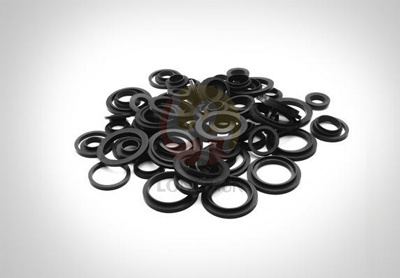
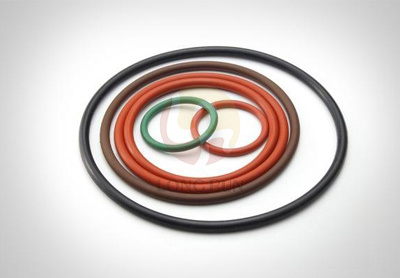
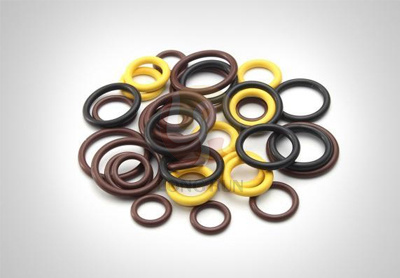
Oil resistant gaskets provide reliable sealing in systems exposed to oils and fuels. Made from durable materials and produced through precise manufacturing, they ensure stability, prevent leakage, and support long-term equipment performance.
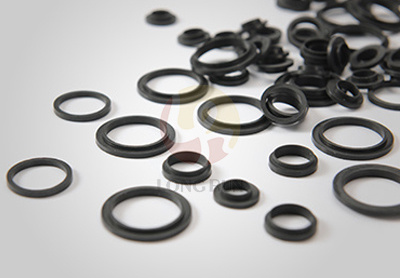
In industrial systems where oils, fuels, and lubricants are constantly present, sealing performance becomes a decisive factor in maintaining equipment reliability. The oil resistant gasket plays a critical role in these environments by providing a stable barrier that prevents leakage, contamination, and pressure loss. Widely used in automotive engines, hydraulic systems, pipelines, and industrial machinery, it ensures that operational efficiency is not compromised even under continuous exposure to petroleum-based media.

The effectiveness of an oil resistant gasket begins with material selection. Among the most commonly used materials are nitrile rubber (NBR), fluorocarbon (FKM), and specialized synthetic compounds, all known for their strong resistance to oils and fuels. These materials are specifically engineered to maintain elasticity and sealing integrity while exposed to hydrocarbons, high temperatures, and mechanical stress. The ability to resist swelling, degradation, and compression loss is what allows these gaskets to function reliably over extended periods.
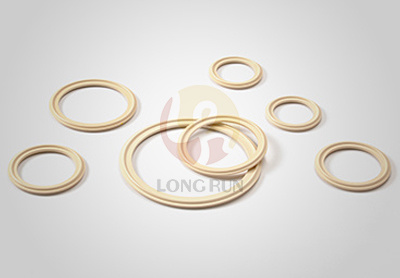
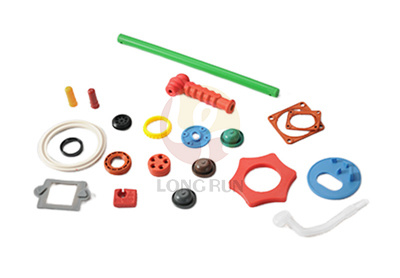
From a structural perspective, oil resistant gaskets are typically manufactured from high-quality rubber sheets or molded compounds that can be customized into various shapes and thicknesses. This flexibility allows them to adapt to different flange designs and sealing requirements. Whether used in low-pressure sealing systems or more demanding industrial applications, the gasket must maintain consistent contact pressure to ensure a tight seal.
Behind every high-performance gasket lies a carefully controlled manufacturing process. In advanced production facilities such as those operated by Longrun Rubber, the process begins with precise formulation of rubber compounds, where material ratios are optimized to achieve the desired oil resistance and mechanical strength. This is followed by mixing, calendaring, and molding processes that ensure uniform density and structural integrity. Precision die-cutting or compression molding techniques are then applied to achieve exact dimensions, while curing processes enhance the material’s durability and elasticity.
Quality assurance is an essential part of the production cycle. Each batch undergoes rigorous testing, including tensile strength evaluation, compression set testing, oil immersion testing, and dimensional inspection. These procedures ensure that the gasket maintains its sealing performance under real-world operating conditions. Such strict quality control not only guarantees product consistency but also reflects a commitment to long-term reliability in demanding applications.
Innovation in oil resistant gasket design continues to evolve alongside industrial needs. Modern products are increasingly focused on improving temperature resistance, extending service life, and enhancing compatibility with a broader range of chemicals. Advanced formulations may also incorporate features such as improved aging resistance and reduced compression deformation, enabling the gasket to perform effectively in both static and dynamic sealing environments.
Equally important is the service philosophy behind the product. Manufacturers that prioritize technical support and customer communication are better able to provide tailored solutions based on specific application requirements. From material selection guidance to customization and after-sales support, a comprehensive service approach ensures that each gasket performs as intended throughout its lifecycle.
In a world where equipment reliability directly impacts operational efficiency, the oil resistant gasket is more than just a sealing component. It represents a combination of material science, precision manufacturing, and engineering expertise. For those seeking dependable sealing solutions, understanding both the product and the process behind it is essential. Reaching out to an experienced manufacturer can provide valuable insights and help identify the most suitable solution for specific industrial applications.
Related News
Unlocking Versatility: The Benefits of Customized Molded Rubber Balls
Customized molded rubber balls are an innovative solution that cater to a wide array of applications across various sectors, particularly in the chemical and rubber manufacturing industries. These specialized products are designed to meet specific requirements, providing enhanced performance, durability, and functionality. By understanding the unique benefits and applications of customized molded
Apr 15,2026
Oil Resistant Gasket: Engineering Reliability for Demanding Sealing Environments
Oil resistant gaskets provide reliable sealing in systems exposed to oils and fuels. Made from durable materials and produced through precise manufacturing, they ensure stability, prevent leakage, and support long-term equipment performance.
Apr 15,2026
Quality Fiber Reinforced Diaphragm Applications: A Comprehensive Guide
Quality Fiber Reinforced Diaphragm Applications: A Comprehensive Guide Table of Contents 1. Introduction to Fiber Reinforced Diaphragms 2. Understanding Diaphragms: Structure and Function 3. Benefits of Fiber Reinforcement in Diaphragms 4. Applications of Fiber Reinforced Diaphragms 4.1 Automotive Industry 4.2 Aerospace Industry 4.3 Ind
Apr 13,2026
Understanding the Role of Rubber Bellows Manufacturers in the Automotive Industry
In the automotive industry, the reliability and performance of various components are critical. One such component is the rubber bellow, which plays an essential role in ensuring that parts function smoothly and efficiently. Rubber bellows are flexible, bellows-like structures made from rubber materials, designed to accommodate movement while protecting the components they encase from dirt, moistu
Apr 11,2026
Viton O-Rings: The Future of Sealing Technology in Automobiles
Viton O-Rings: The Future of Sealing Technology in Automobiles Table of Contents 1. Introduction to Viton O-Rings 2. What Makes Viton O-Rings Unique? 3. Applications of Viton O-Rings in the Automotive Industry 3.1 Fuel Systems 3.2 Hydraulic Systems 3.3 Engine Components 4. Advantages of Using Viton O-Rings 4.1 Resistance to Chemicals and Oils 4.2 High-Temperature Performance
Apr 09,2026

Add: Building # 7, No. 27, Songbai Ling Avenue, Zhonghan Huizhou Industrial Park, Zhongkai High-tech Zone, Huizhou, Guangdong, China 516032

LONGRUN
Privacy Policy | SEO | Support: 300.cn