
The Comprehensive Guide to the Manufacturing Process of Viton O-Rings for Automotive Parts
Publish:
2025-12-05


The Comprehensive Guide to the Manufacturing Process of Viton O-Rings for Automotive Parts
Table of Contents
1. Introduction to Viton O-Rings in Automotive Applications
2. The Importance of Viton in Automotive Parts Manufacturing
3. Raw Materials Used in Viton O-Ring Production
4. The Step-by-Step Manufacturing Process of Viton O-Rings
4.1 Mixing Process
The Comprehensive Guide to the Manufacturing Process of Viton O-Rings for Automotive Parts
Table of Contents
- 1. Introduction to Viton O-Rings in Automotive Applications
- 2. The Importance of Viton in Automotive Parts Manufacturing
- 3. Raw Materials Used in Viton O-Ring Production
- 4. The Step-by-Step Manufacturing Process of Viton O-Rings
- 5. Quality Control in Viton O-Ring Manufacturing
- 6. Applications of Viton O-Rings in the Automotive Industry
- 7. Benefits of Using Viton O-Rings
- 8. The Future of Viton O-Ring Manufacturing in Automotive Parts
- 9. Frequently Asked Questions
- 10. Conclusion
1. Introduction to Viton O-Rings in Automotive Applications
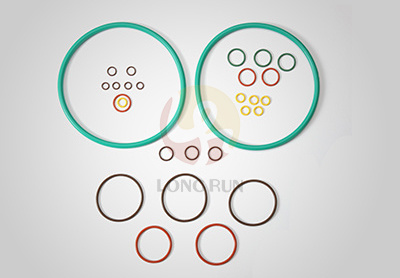
Viton O-Rings are critical components in various automotive applications, providing reliable sealing solutions under challenging conditions. Their resistance to heat, chemicals, and wear makes them an ideal choice for a multitude of automotive components, including engines, transmissions, and fuel systems. Understanding the manufacturing process of these O-Rings is essential for ensuring quality and performance in automotive parts.
2. The Importance of Viton in Automotive Parts Manufacturing
The automotive industry demands high-performance materials that can withstand extreme environmental conditions. Viton, a brand of fluoropolymer rubber, offers exceptional resistance to heat, oil, and chemicals, making it a preferred choice for automotive O-Rings. This section explores why Viton is integral to automotive manufacturing and how it enhances the durability and reliability of automotive parts.
3. Raw Materials Used in Viton O-Ring Production
The production of Viton O-Rings begins with the selection of high-quality raw materials. The primary component is the fluoropolymer resin, which is combined with various additives to enhance performance. These may include fillers, plasticizers, curing agents, and stabilizers. Each material plays a crucial role in determining the final properties of the O-Ring, such as hardness, flexibility, and chemical resistance.
4. The Step-by-Step Manufacturing Process of Viton O-Rings
The manufacturing process of Viton O-Rings involves several critical steps, each designed to ensure the final product meets stringent performance standards.
4.1 Mixing Process
The first step in manufacturing Viton O-Rings is the mixing of the raw materials. This process involves precise measurements of the fluoropolymer resin and various additives. High-shear mixers are often used to ensure a uniform blend, which is vital for achieving consistent performance in the final product. The mixing process significantly impacts the O-Ring’s properties, such as its elasticity and chemical resistance.
4.2 Molding Process
Once the materials are mixed, the next step is the molding process. The blended material is placed into molds that define the shape and size of the O-Rings. Various molding techniques, including compression molding and transfer molding, may be employed depending on the requirements of the O-Ring. This stage is crucial as it determines the final dimensions and surface finish of the O-Ring.
4.3 Curing Process
The curing process involves heating the molded O-Rings to initiate a chemical reaction that solidifies the rubber and enhances its mechanical properties. This stage is critical for cross-linking the polymer chains, which ultimately defines the O-Ring's durability and resistance to deformation. The curing time and temperature are carefully controlled to optimize the performance characteristics of the Viton O-Ring.
4.4 Finishing Process
After curing, the O-Rings undergo a finishing process, which may include trimming, grinding, or surface treatment to achieve the desired specifications. This stage ensures that any imperfections from the molding and curing processes are eliminated. Proper finishing also improves the aesthetic quality of the O-Rings, making them suitable for automotive applications where appearance can be as important as functionality.
5. Quality Control in Viton O-Ring Manufacturing
Quality control is paramount in the manufacturing of Viton O-Rings. Rigorous testing protocols are established to ensure each batch of O-Rings meets industry standards. This includes tensile strength testing, elongation tests, and chemical resistance evaluations. Advanced inspection technologies, such as digital microscopy and automated measurement systems, are employed to detect any defects in the O-Rings before they are shipped to customers.
6. Applications of Viton O-Rings in the Automotive Industry
Viton O-Rings find a wide range of applications in the automotive industry. They are commonly used in fuel systems, hydraulic systems, and engine components, where their ability to withstand extreme temperatures and aggressive chemicals is critical. This section discusses specific applications and the performance requirements that Viton O-Rings fulfill in each scenario.
7. Benefits of Using Viton O-Rings
The advantages of using Viton O-Rings over traditional rubber materials are numerous. Viton O-Rings offer superior resistance to heat, fuel, and oil, making them ideal for automotive environments. They also exhibit low compression set, ensuring a reliable seal over time. This section elaborates on the key benefits that make Viton O-Rings a preferred choice in the automotive industry.
8. The Future of Viton O-Ring Manufacturing in Automotive Parts
As the automotive industry evolves, the demand for high-performance sealing solutions is expected to increase. Innovations in materials science and manufacturing techniques will continue to drive the development of Viton O-Rings. This section speculates on future trends in Viton O-Ring manufacturing, focusing on sustainability, performance enhancements, and the integration of new technologies that can revolutionize the industry.
9. Frequently Asked Questions
1. What are the main advantages of Viton O-Rings?
Viton O-Rings offer excellent resistance to heat, oil, and chemicals, ensuring reliability and longevity in automotive applications.
2. How is the curing process conducted for Viton O-Rings?
The curing process involves heating the molded O-Rings to initiate a chemical reaction that solidifies the material, enhancing its properties.
3. What testing methods are used to ensure the quality of Viton O-Rings?
Quality control includes tensile strength tests, elongation tests, and chemical resistance evaluations, among other methods.
4. Can Viton O-Rings be used in extreme temperature conditions?
Yes, Viton O-Rings are designed to withstand extreme temperatures, making them suitable for various automotive applications.
5. What role do additives play in the manufacturing of Viton O-Rings?
Additives enhance specific properties such as elasticity, durability, and chemical resistance, ensuring optimal performance of the O-Rings.
10. Conclusion
Understanding the manufacturing process of Viton O-Rings is essential for anyone involved in the automotive industry. From the careful selection of raw materials to the rigorous quality control measures, every step plays a critical role in ensuring the performance and reliability of these vital components. As automotive technology continues to advance, Viton O-Rings will remain a cornerstone of high-performance sealing solutions, contributing to the overall efficiency and safety of vehicles.
Related News
Innovative Uses of Rubber Bonded Metal Products in Chemical Manufacturing
Innovative Uses of Rubber Bonded Metal Products in Chemical Manufacturing Table of Contents 1. Introduction to Rubber Bonded Metal Products 2. Benefits of Rubber Bonded Metal Products in Chemical Manufacturing - 2.1 Durability and Resistance to Chemicals - 2.2 Cost-Effectiveness of Rubber Bonded Metal - 2.3 Safety Enhancements in Chemical Processes 3. Key Applications of Rubbe
Dec 13,2025
Unlocking the Potential of Customized Molded Rubber Balls for Diverse Applications
Customized molded rubber balls are increasingly becoming essential components in various industries due to their adaptability and unique properties. These balls can be tailored to meet specific requirements, such as size, shape, color, and elasticity, providing solutions for a wide range of applications. By understanding the advantages and processes involved in creating these specialized products,
Dec 11,2025
Exploring the Role of Quality Fiber Reinforced Diaphragms in the Rubber Industry
Exploring the Role of Quality Fiber Reinforced Diaphragms in the Rubber Industry Table of Contents Introduction: The Importance of Fiber Reinforced Diaphragms Understanding Diaphragms in Rubber Products Fiber Reinforcement: The Backbone of Diaphragms The Manufacturing Process of Fiber Reinforced Diaphragms Applications of Fiber Reinforced Diaphragms Advantages of Using Qua
Dec 09,2025
Essential Insights on Rubber Bellows Manufacturers in the Automotive Industry
--- Rubber bellows are crucial components in the automotive industry, designed to provide flexibility and protection for various mechanical parts. As a manufacturer of automotive transverse components and rubber hoses, understanding the dynamics of rubber bellows manufacturing can significantly enhance your operations. When seeking a rubber bellows manufacturer, it is essential to consider several
Dec 07,2025
The Comprehensive Guide to the Manufacturing Process of Viton O-Rings for Automotive Parts
The Comprehensive Guide to the Manufacturing Process of Viton O-Rings for Automotive Parts Table of Contents 1. Introduction to Viton O-Rings in Automotive Applications 2. The Importance of Viton in Automotive Parts Manufacturing 3. Raw Materials Used in Viton O-Ring Production 4. The Step-by-Step Manufacturing Process of Viton O-Rings 4.1 Mixing Process
Dec 05,2025

Add: Building # 7, No. 27, Songbai Ling Avenue, Zhonghan Huizhou Industrial Park, Zhongkai High-tech Zone, Huizhou, Guangdong, China 516032

LONGRUN
Privacy Policy | SEO | Support: 300.cn